

The American Class Conciousness
MAGA reactions to the Epstein scandal

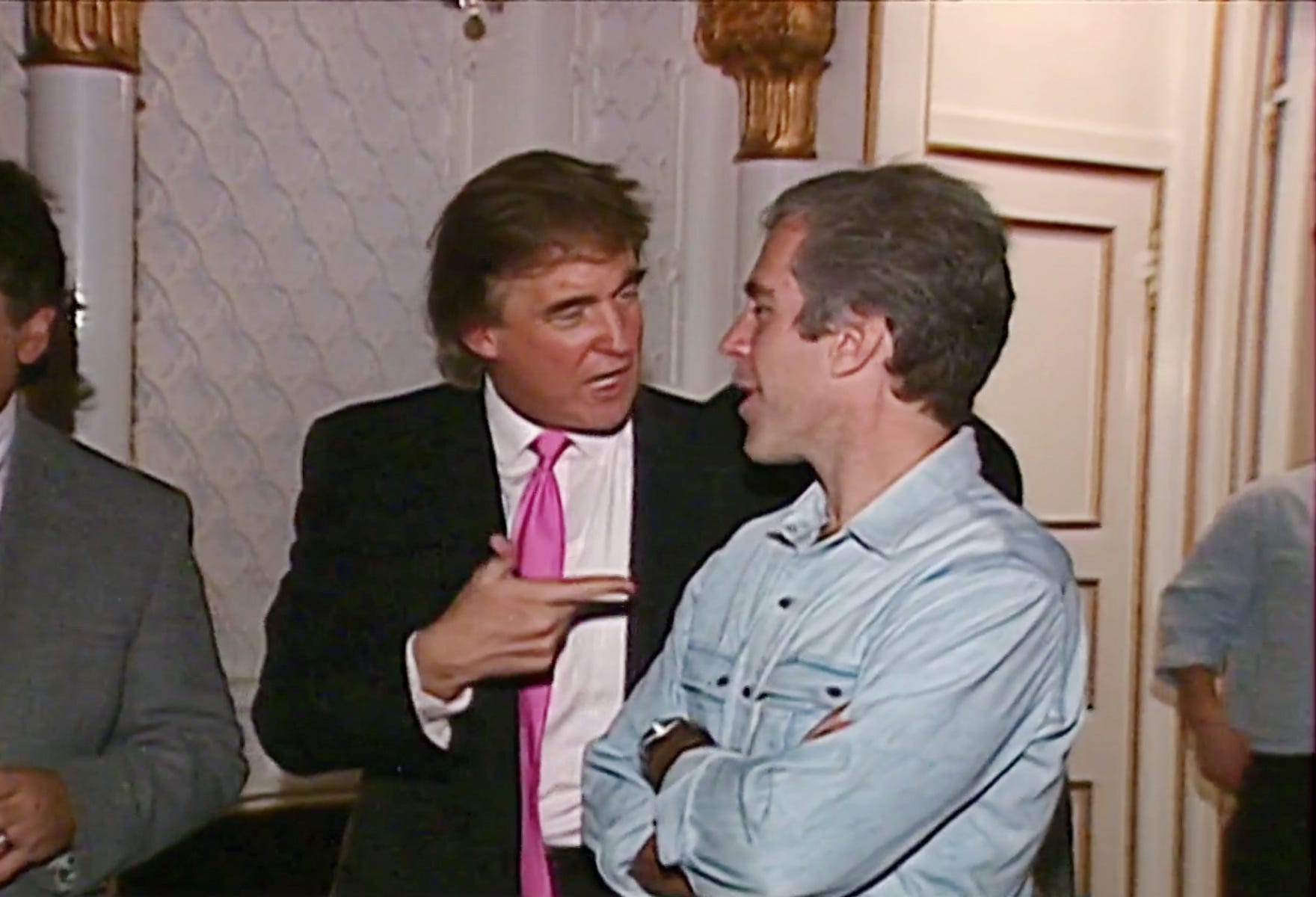
On July 8th, 2025, the Trump administration’s Department of Justice released a statement stating that there is no “Epstein list”. Just a few days later, after substantial backlash from both media outlets and alt-right ideologues on social media, the president made a social media post stating that the list was a political fiction maliciously manufactured by the democrats to smear his campaign. A few days after that, Trump made another pivot: stating that he would request the DOJ release some of the Epstein documents.
This is, of course, a blatant display of dishonesty from the administration, but nothing that hasn’t been seen before. In a sense, Trump’s success is founded on his unashamed focus on his right-wing populist platform and denouncing responsibility for any hazard as political sabotage from the opposition. This rhetorical tactic has led to a ruthless post-truth PR strategy riddled with whataboutisms, personal attacks, distractions, and lies.
What makes the Epstein scandal a point of interest is that the MAGA base itself has (to an extent) moved to call out the administration’s deception and inconsistencies; This matter has certainly stayed relevant far longer than any of the administration’s previous, and arguably more consequential, actions (like the bombing of Iran, for example).
What is it, then, that makes the betrayal over the Epstein matter particularly salient to Trump supporters?
“Deep State”
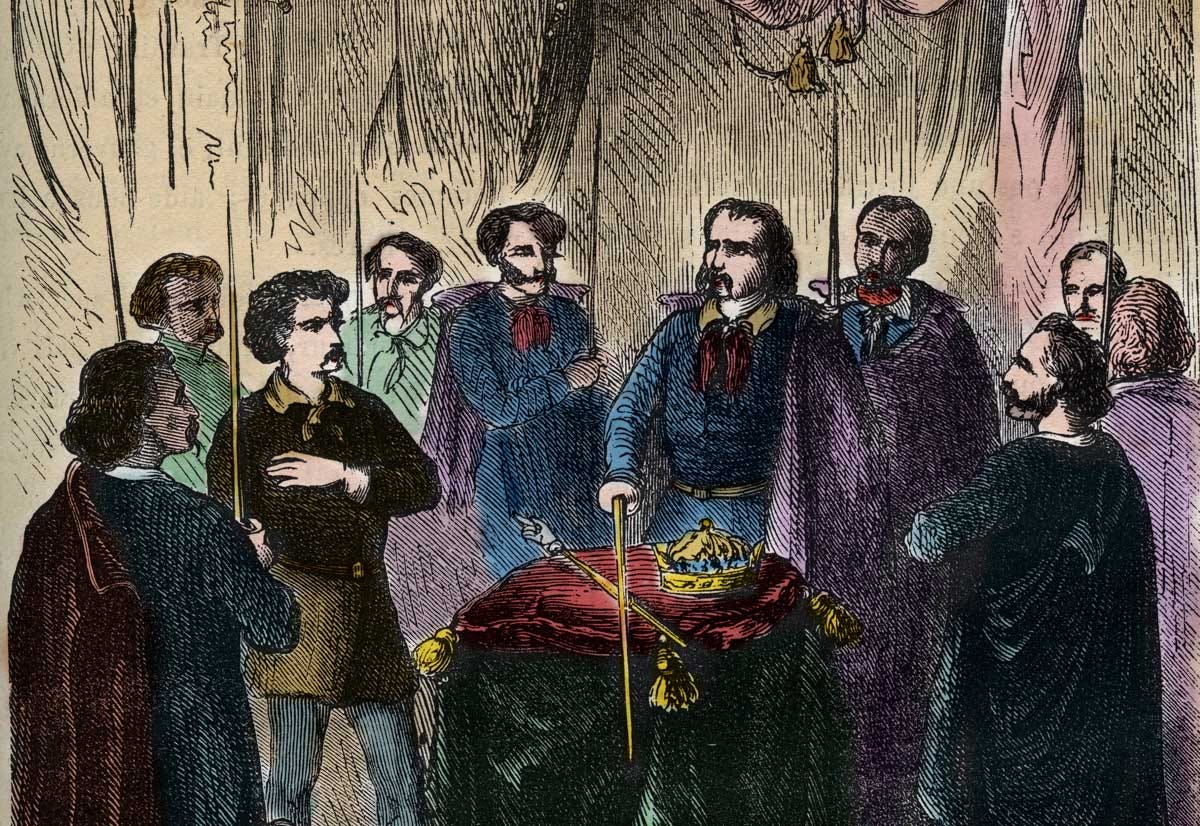
The MAGA movement and conservatives that precede it have always embraced conspiracies as a political instrument. Trump, in particular, has deeply associated himself with the idea of a “deep state”, an enigmatic body of political and economic elites that control society and are above the law. The Illuminati conspiracies would be a ubiquitous instance of this particular paranoia concerning the question of who is really in charge.
Modern-day deep state theories may differ vastly in subject matter. Some more well-known ones are that JFK’s assassination was the product of a CIA/FBI plot. Other theories manifest themselves in particularly outlandish narratives. An example might be QAnon, particularly popular during the early 2020s, which tells of a cabal of elites (democrats, Hollywood celebrities, and particularly the Clintons) that trafficked children for ritualistic abuse and sacrifice, reminescent of the older Pizzagate theory, which espouses a narrative that children are kept imprisoned in the basement of a pizzashop for satanic purposes, even though in reality the shop never even had a basement.
These conspiracy theories fuse legitimate concerns about state overreach (mass surveillance, elite impunity, political violence) with fantastical, often theological mysticisms. The Snowden leaks, along with whistleblowers before and after him, which revealed the vast architecture of government surveillance targeting the public, fueled widespread suspicion that democratic institutions no longer serve the people, but rather manage them. Yet rather than motivate organized political resistance, these fears and paranoia against the state often mutate into grotesque spectacles: satanic rituals, adrenochrome harvesting, and pedophile cabals. In this sense, public paranoia does not seek resolution through political accountability, but expression through mythology.
How these theories insert themselves into the political discourse, typified by QAnon, is by preying on conservative nostalgia: picturing contemporary American democracy as a tarnished remnant of its former glory (an unspecified period of time when life was better and simpler). A secret collective of elites acts as a cancer within the system that subverts the will of the American people, a malaise that individuals like Trump are willing to call out and take action to eradicate. Indeed, one of Trump’s campaign promises was to “drain the swamp”, eliminating wasteful spending and opaque government bureaucracy (often portrayed by conspiracy theorists as cover schemes to funnel money into the pockets of democrats). Government corruption, violence, and surveillance are treated as the consequence of individual moral corruption and sick ambition rather than the structural consequence of a highly bureaucratized and divided capitalist society.

Neoreactionary Class Formation
In essence, the struggle of the American people espoused in these esoteric conspiracies is deeply reminiscent of established theories of class conflict, except that instead of focusing on material contradictions in the ownership of capital, class consciousness is formed around abstract traditional (often Christian) morality, accountability to the democratic system and rule of law, as well as a vague ideal of true American identity, combined, these sentiments consolidate into an obsession with power over institutions of cultural production. Such an interpretation of American conservative identity would be consistent with the existing explanatory framework for American right-wing nationalism: it acts as a red herring, a distraction, for the increasingly undeniable consequences and contradictions within American capitalism (stagnating wages, rising costs of living, and increasingly visible plutocracy and oligarchy). Nationalism redirects frustrations at more and more dire material conditions towards an ill-defined other, and an (un-American) out-group that acts as a scapegoat for proletariat suffering. What emerges, then, is not the dissolution of class politics, but its transposition: class is moralized rather than materialized. Cultural consumption, moral attitudes, and political posturing take the place of structural economic antagonism. The result is a schema where the ‘virtuous worker’ is no longer defined by exploitation, but by adherence to a certain nationalistic and moral code.
Neoreactionary and Dark Enlightenment frameworks consolidate these antagonisms and paranoia towards a cohesive target of “the cathedral”: a decentralized and self-reinforcing network of elite cultural institutions that constructs a progressive hegemony proposed by Curtis Yarvin. Through this lens, we observe the formation of a para-Marxist form of class analysis rooted not in material but cultural production. In this schema, the ruling class are not the capitalists per se (though they are often indistinguishable), but the Ivy League-credentialed, bureaucratically entrenched, morally decadent managers of consensus reality.
Upon further analysis, it is quite clear why this brand of “class” identity is more appealing in the American context. For one, awareness of material struggles under the capitalist elite has been significantly mitigated by the ubiquitous adoption of the American dream: mobility acts as the ultimate justification for inequality, and in turn moralizes material realities. Your material well-being becomes apolitical and collapses in totality into the realm of individual responsibility (you win because of your hard work and good character, and you fail because you lack these traits). This phenomenon is well documented through studies of meritocratic ideologies, particularly by Michael Sandel and Daniel Markovitz (Sandel 20, Markovitz 19). Second, the US has never experienced Marxist influence as intensely as Europe, and its development trajectory in the post-war and Cold War years, despite the strides made under the New Deal coalition, is incomparable to that of European social democracy / Keynesian economic development in instances like Les Trente Glorieuse (Piketty 13). It is also reflected in the structure of the American welfare and financial systems, which brutally punishes the least well off, denying opportunity, maximizing risk, and exploiting economic and social insecurity born out of the impoverished’s status as social pariahs (Desmond 23).
Thus, a unique conception of economic inequality and elitism emerges. As David Graeber summarized:
A truck driver’s son from Wyoming might not have very much chance of becoming a millionaire, but it could happen. Certainly, it’s much more likely than his ever becoming an international human rights lawyer, or drama critic for the New York Times. Such jobs go almost exclusively to children of privilege. Insofar as there are not quite enough children of privilege to go around — since elites almost never produce enough offspring to reproduce themselves demographically — the jobs are likely to go to the most remarkable children of immigrants (Graeber 18).
In the absence of identification around material struggle, the attention of the populace is then naturally directed to social morality and elite culture: the American brand of social progressivism that intensely focuses on identity politics through the lens of liberal centrism, manufactured diversity without structural change. To become truly elite, one must become an arbiter of moral justice for American society at large, to be fluent in the sophisticated jargon of educated socialites, cultural critics, and the progressive youth well versed in complex theory. The cultural barrier to elitism far outweighs the significance of material hardships in the American consciousness.
In a sense, the American public is intensely aware of the interplays of ideology at play within their nation, but again, attention is directed to moral outrage rather than how ideology enforces capitalist domination over the working class. American ideology resolves its internal contradictions through symbolic inversions: poverty is moral failure, wealth is divine favor, and institutional domination is rebranded as individual freedom. The more catastrophic the material reality becomes, the more frantically the symbolic order is invoked to conceal it. Christianity has been a persistent influence within American politics and public consciousness in general. Thus, the moral class dichotomy becomes one of liberal progressivism vs (mostly) Christian conservatism / Christian nationalism. What results is an intense moral horror and outrage at the prospect of social moral failure at the hands of elite progressive cultural institutions.
The manufacturing of culture is seen to be monopolized by the progressive elite, who are well educated, cultured, and uses big words too foreign for those only trained in vernacular. Thus the perceived concentration of cultural capital at the top of society becomes the anchor for the formation of the neoreactionary proletariat.
Rather than interrogate the structural causes of material deprivation, a function rendered void by the ubiquity of meritocratic ideology, neoreactionary class analysis instead transposes ‘class war’ onto the field of cultural production and ideological dominance, constructing a fictive proletariat of conservative Christians and disenfranchised whites against a cosmopolitan elite that holds symbolic power but not necessarily economic capital.
Historically dominant ethnic and cultural groups feel neglected by a progressive culture which tries to right historical wrongs without dealing with the structures that manufacture division. Thus a feeling of injustice, a desperate fear of being left behind in a zero sum capitalist society, convinces the most privileged (at least culturally) to believe they are the oppressed.
A Reactionary Leninist Vanguard
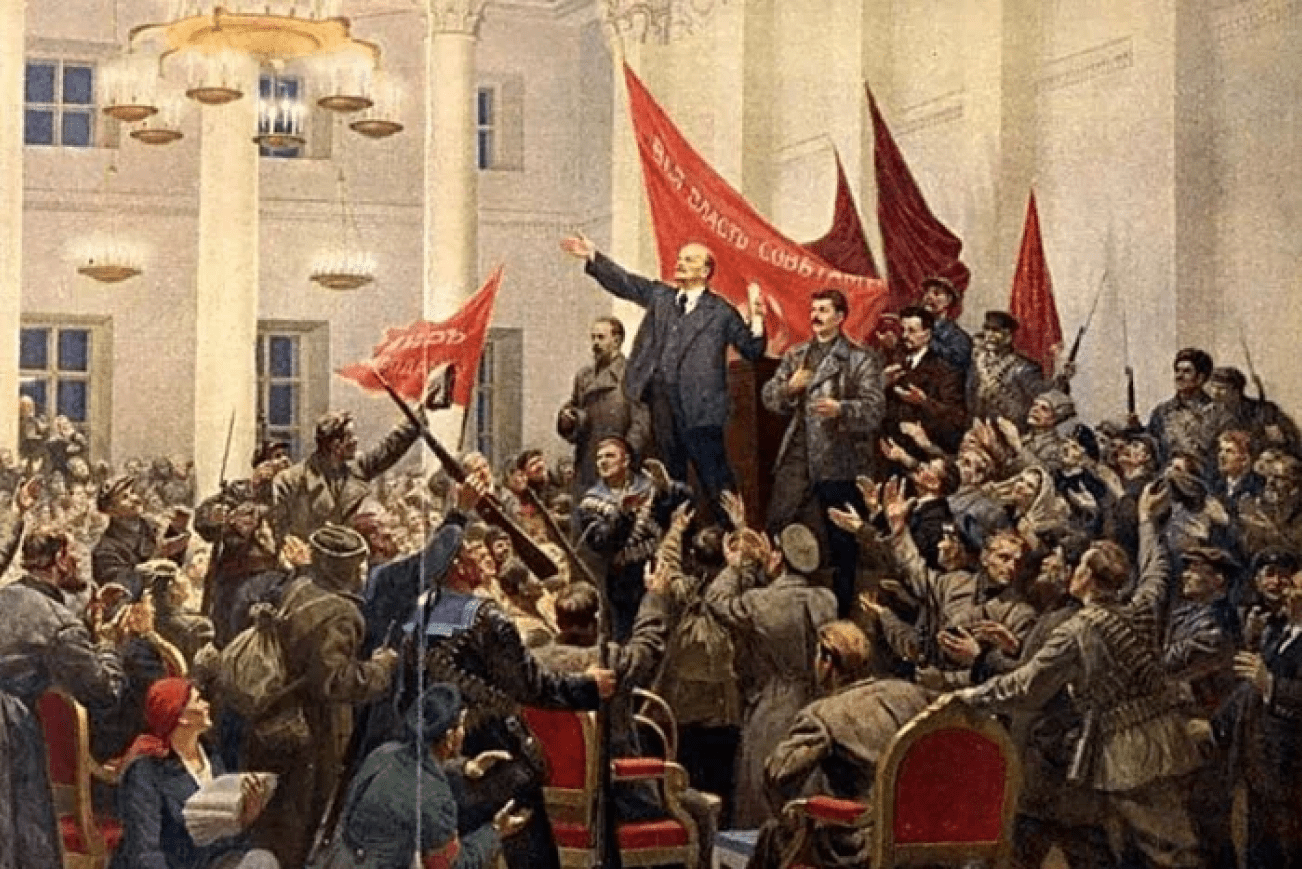
It makes perfect sense, then, why Trump would become the voice of the American moral proletariat under the neoreactionary framework. He is vulgar where “the cathedral is polished, straight-forward and intuitive where they require complex logical dissection, impulsive where they are procedural, loyal to “the people” in contrast to their cosmopolitan abstraction of “humanity.” Trump is symbolically constructed as the outsider to this system, even though he is materially of it. His crassness, vulgarity, disdain for bureaucratic protocol, and attacks on elite institutions serve as gestures of negation that resonate with the dispossessed. Even when his policies often mirror or reinforce elite interests, his aesthetic opposition to The Cathedral is enough to preserve his populist image.
But a question inevitably arises: how does MAGA reconcile Trump’s identity as a part of the elite with his antagonism to the class he is a part of? As mentioned in the last section, his material wealth is not necessarily a substantive contradiction to neoreactionary ideology because meritocracy significantly mitigates the radicalization potential of material disparity. However, the aesthetics of his wealth also feed into his cultural legitimacy with the MAGA base. One only needs to look at an image of the Oval Office under Trump’s administration to understand what this refers to: gold, on the walls, atop the fireplace, across the floor, and adorning the couches. It is gawdy, tasteless, and excessive in every sense, but this is precisely the point.
Trump is a poor man’s rich man. It is the image of wealth most accessible to those who have never, or can never hope to experience it: lavishness without function, decadence without pretense, with wealth demonstrated brutishly through sheer material fetish rather than any artistic, ideological, or artisanal value placed upon it. Going back to Graeber’s quote, Trump is the type of rich person that a Wyoming truck driver can imagine their children becoming. Trump is a symbol of material wealth distilled from the cultural barriers to elitism, an accessible idol for the oppressed.
Thus, Trump fulfills the role of a vanguard for the neoreactionary proletariat. He is a member of the elite free of its moral hegemony, and elevated by his antagonism towards elitism. MAGA supporters, many of whom are downwardly mobile middle-class Americans, channel their political desire into Trump as the instrument of systemic desecration. Their loyalty is not to policy outcomes or constitutionalism, but to the fantasy that someone, anyone, might finally breach the untouchable walls of elite impunity.
Epstein and Metaphysical Rupture
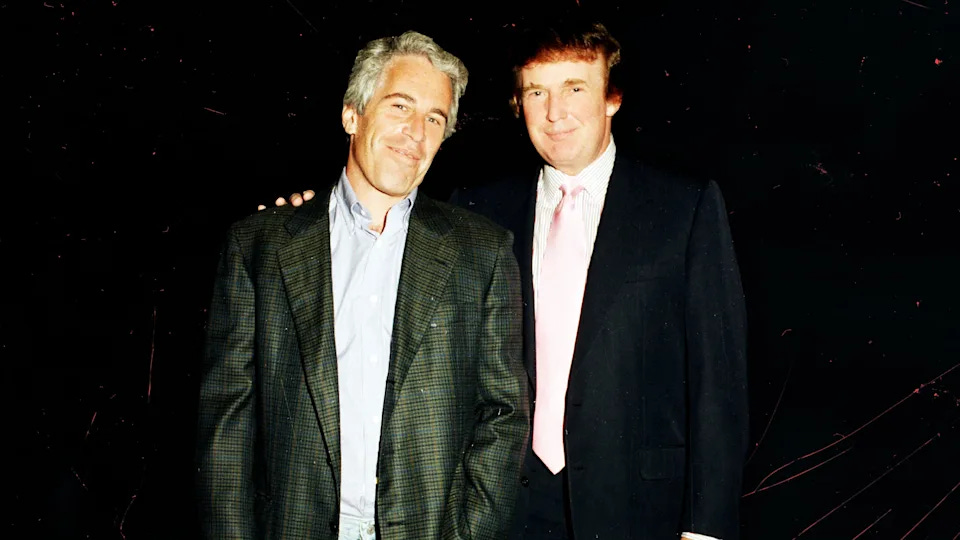
The Epstein scandal is so destructive to Trump precisely because it renders the mechanisms that reconciled his elite status with his elite antagonism void. It reveals something that we have always known: Trump was never for the people, but for himself and his billionaire contemporaries. However, from a leftist point of view, this adherence to the bourgeois class has been material, which, again, is a fact vastly obscured by meritocratic ideology. Epstein marked a moment of moral rupture, where Trump revealed his moral adherence to the very institution he vowed to take down.
He might not be a stereotypical “lib”, but he is certainly not a member of the neoreactionary proletariat. The Epstein scandal has so much staying power precisely because it is a perfect articulation of deep-state paranoia, liberal hypocrisy (think Clinton), and compromised American democracy. Trump’s association with the scandal, and now his consistent effort to aid its coverup, then places him directly inside the metaphysical structure as a subject of popular paranoia and moral outrage.
Bibliography
Desmond, Matthew. Poverty, by America. Crown, 2023.
Graeber, David. Bullshit Jobs: A Theory. Simon & Schuster, 2018.
Markovits, Daniel. The Meritocracy Trap. Penguin Press, 2019.
Piketty, Thomas. Capital in the Twenty-First Century. Translated by Arthur Goldhammer, Belknap Press of Harvard University Press, 2014
Sandel, Michael J. The Tyranny of Merit: What’s Become of the Common Good? Farrar, Straus and Giroux, 2020.